No one has to convince school-based OTPs that fingerprint and thumbprint crafts are excellent activities that support many important skills in school-based settings. These activities develop:
- Fine motor skills – Pressing fingers with controlled pressure and precise placement develops dexterity and finger strength
- Visual-motor integration – Coordinating hand movements with visual input to create specific patterns or designs
- Sensory processing – Providing tactile input through finger pressure and paint/ink texture
- Bilateral coordination – Using both hands together (one to hold paper, one to make prints)
- Hand-eye coordination – Precisely placing fingerprints to create intended designs
- Motor planning – Organizing sequential movements to create complex patterns or pictures
- Proprioception – Developing awareness of finger position and pressure required
- Grasp development – Supporting proper finger positioning and grip strength
- Visual perception – Recognizing patterns, spatial relationships, and visual discrimination
- Attention and focus – Maintaining concentration to complete detailed work
- Creativity and self-expression – Allowing personal artistic choices and design
These activities can be easily adapted for different developmental levels and can incorporate academic concepts (counting prints, creating letter shapes, etc.) while simultaneously building foundational skills for handwriting, scissor use, and other fine motor tasks.
Level 1
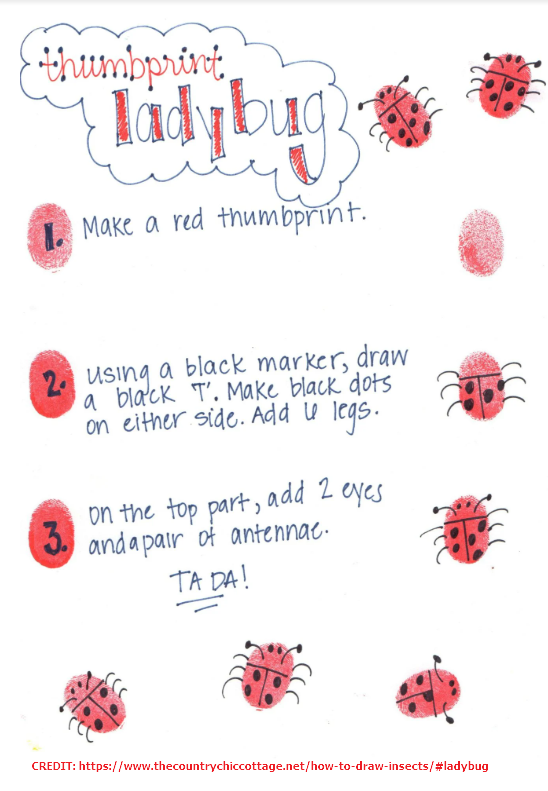
Angie Holden from Country Chic Cottage (via Pinterest) makes these adorable ladybugs with red and black paint and a marker! Simply adorable.
Level this up by leaving off the legs and antennae, cutting each ladybug out and using black construction paper to glue legs and antennae cutouts to the bodies!
Level 2
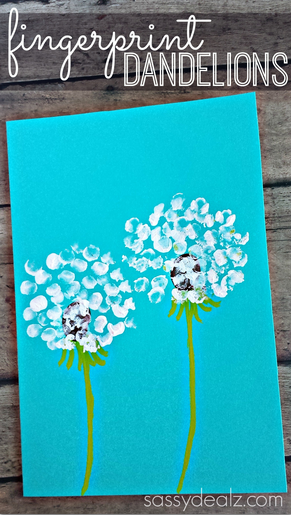
Select a cardstock paper for this adorable springtime craft. Dandelions with just a few steps for a fast craft, but if you want to level-up the time and technique, Sassydealz shows you how to make this project into a thoughtful greeting card… “I think you’re Dandy… and I’m not lion!”
Be sure to incorporate some little dandelion bits blowing in the wind.
Level 3
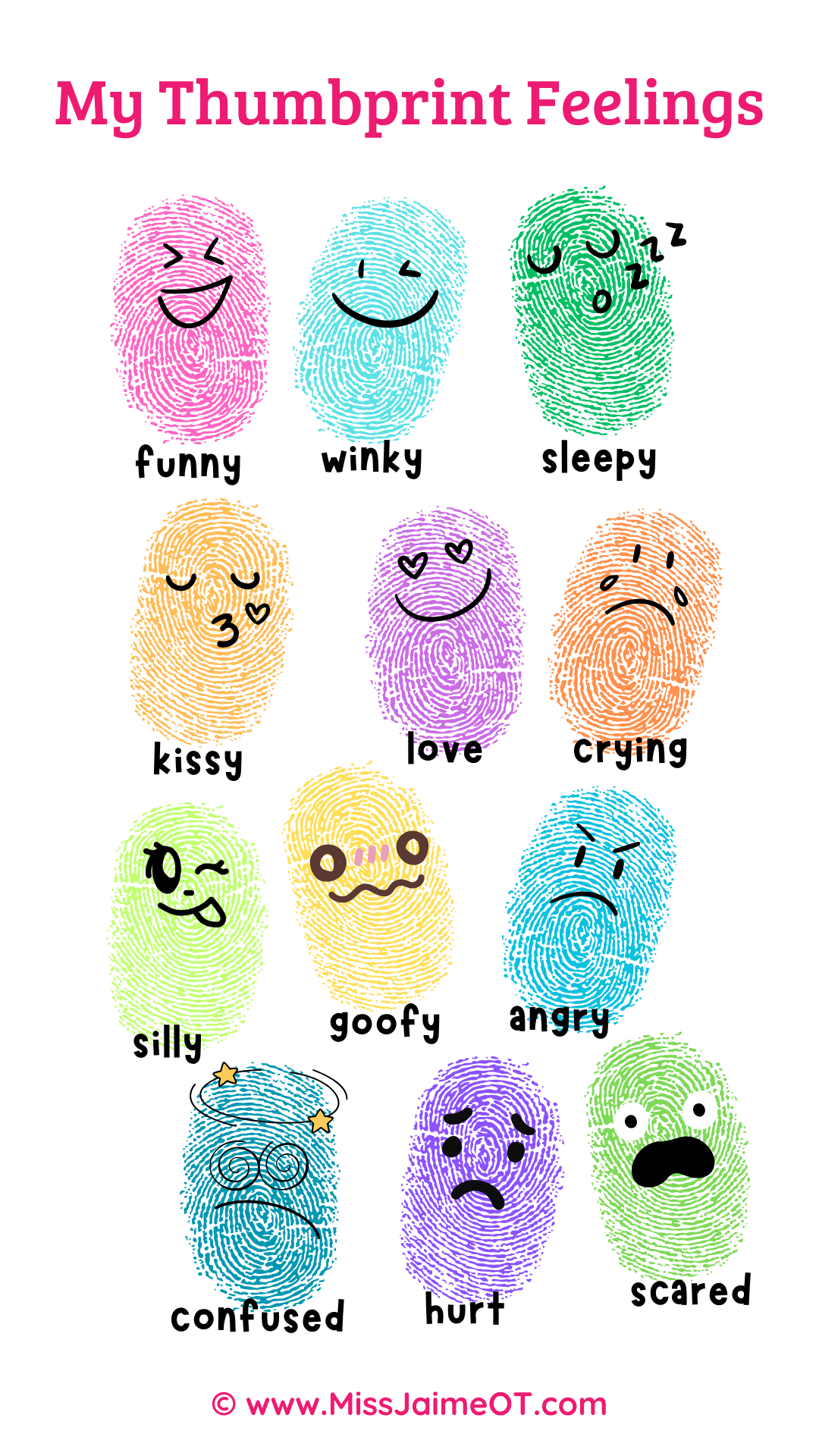
In this example, I made thumbprints and drew faces on them to prompt an SEL discussion about feelings and how to regulate the strong feelings when they get overwhelming.
This could also be birds on a wire or a tree branch.
Maybe it’s a family portrait with a little imagination.

Level 4
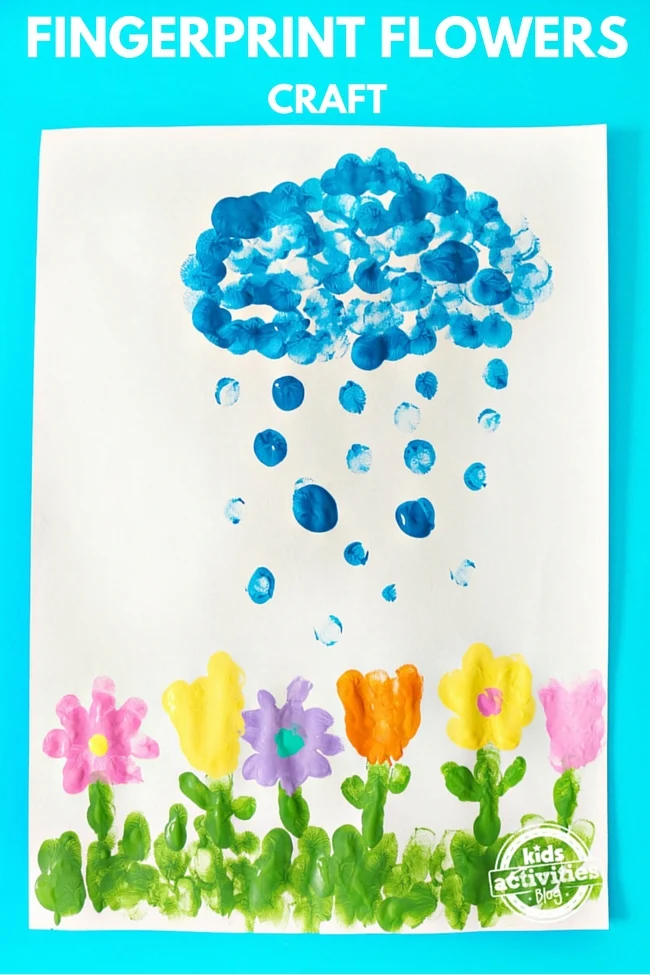
What a gorgeous all-in-one spring scene! Every element, cloud, raindrops, grass, stems, and flower petals, is made entirely with fingers. The wonderful team at Kids Activities Blog has the full how-to, so go check them out!
Level this up by counting the raindrops together, naming flower colors in sequence, or turning it into a mini science lesson: why do April showers bring May flowers?
Level 5
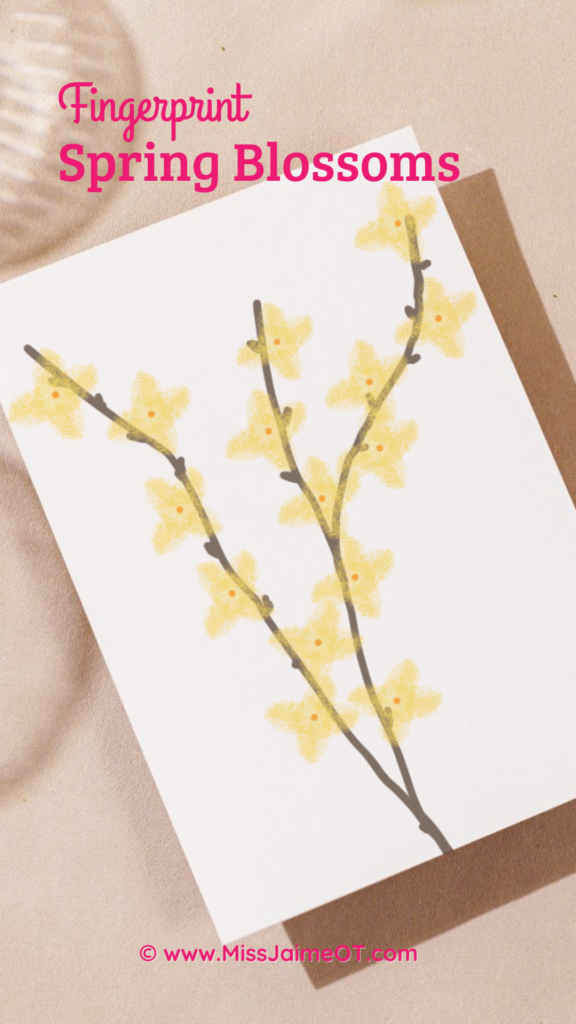
Think forsythia! Those cheerful yellow bursts that bloom before anything else dares to wake up! Draw or paint a simple branch, then press bright yellow fingerprint clusters along it to mimic the blooms. Simple, stunning, and a great conversation starter about the first signs of spring.
Level this up by adding tiny green fingerprint buds at the branch tips, or spreading across a long sheet of paper for a hallway display.
Level 6
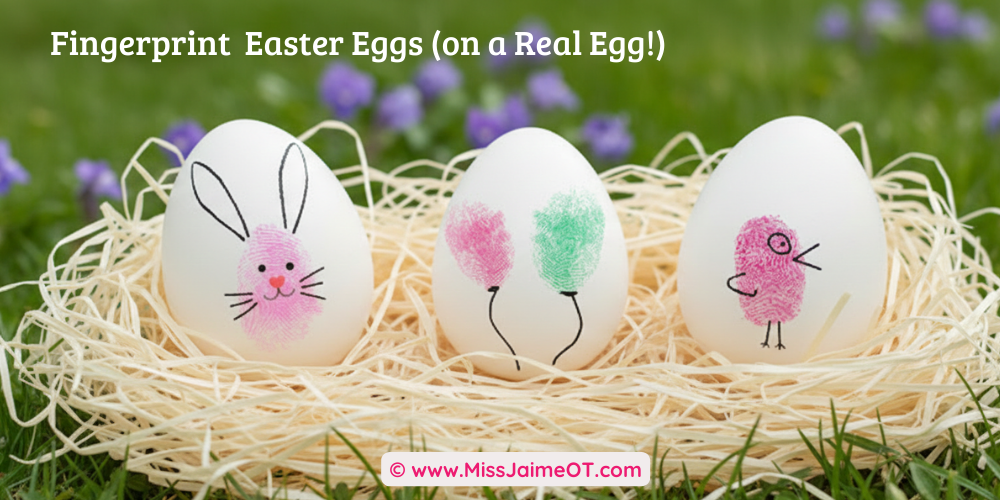
Take it off the page and onto the real thing! Use hard-boiled or blown-out eggs as the canvas. Fingerprinting on a curved surface is a whole different challenge. Kids naturally adjust their pressure and grip as they rotate the egg, without even realizing the great fine motor work they’re doing.
Level this up by asking kids to plan a color pattern before they start, whether rainbow order, alternating, or section-by-section. Once the paint is fully dry, seal with a brush-on coat of Mod Podge using a foam brush to protect the design and keep them as keepsakes!